Your cart is empty.
- Categories

Tesofensine is classified in the research literature as a triple monoamine reuptake inhibitor, meaning it is studied for its interaction with dopamine, norepinephrine and serotonin transporter proteins [C3]. It is a small molecule, not a peptide, and it is listed under the metabolic peptides category on Elivena for research organisation rather than because of any structural relationship to peptides. The catalogue entry is Tesofensine 500mcg (30 capsules).
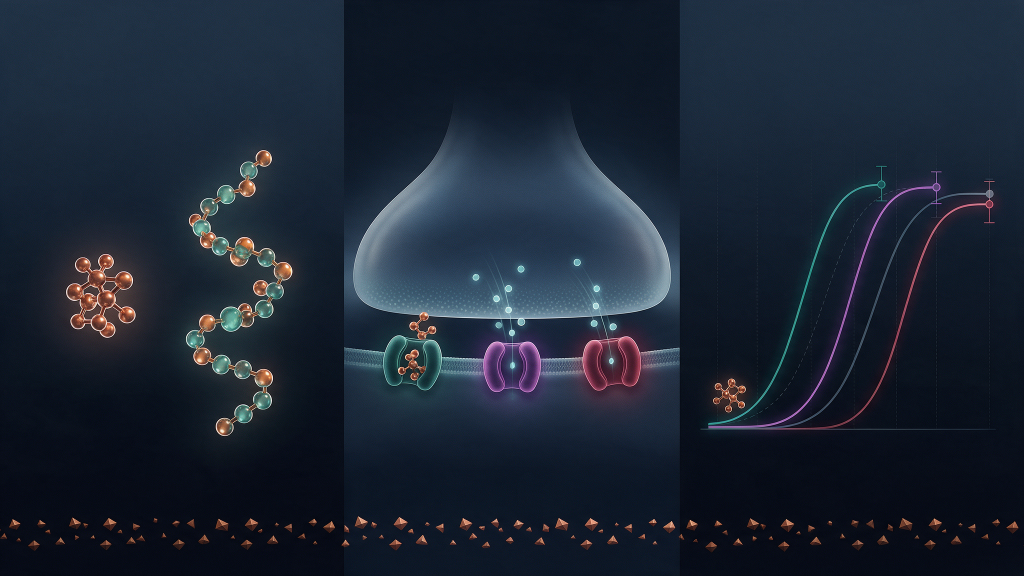
A monoamine reuptake inhibitor is a molecule studied for its ability to slow the reuptake of monoamine neurotransmitters. Reuptake is the process by which a released neurotransmitter is transported back into the presynaptic cell. The following definitions are general pharmacology and are not attributed to a specific reference in this article.

Neurotransmitter research examines how chemical signals are released, received and cleared at the synapse. Monoamines include dopamine, norepinephrine and serotonin. Transporters for each of these are commonly used targets in in vitro assays, where a candidate compound is tested for its ability to inhibit transporter function.
Early clinical characterisation of Tesofensine, then designated NS 2330, was reported in a movement disorder context [C2]. That work is cited here as historical background on how the compound was first described in the literature, not as evidence of any effect in a research model.
Quantitative transporter data — IC50 or Ki values at the dopamine, norepinephrine and serotonin transporters — would normally come from primary in vitro characterisation studies.
In vitro means performed outside a living organism, typically in cell culture, isolated tissue or enzyme preparations. In vitro work offers controlled conditions for concentration, temperature and pH, which makes it useful for isolating transporter-level effects before moving to more complex systems.
Preclinical in vivo work has also been published. Tesofensine has been studied in the diet-induced obese rat model, where its effects were examined in relation to α1-adrenoceptor and dopamine D1 receptor pathways [C3]. This is a rodent pharmacology model, and results in that model do not establish effects in any other species or system. It is relevant here because it illustrates the type of metabolic research model in which the compound has been characterised.
Researchers working with Tesofensine in vitro should follow standard practice: calibrated equipment, validated assay systems, documented procedures, and appropriate controls. Solubility, stability and storage conditions should be confirmed against the supplier specification, since these properties affect assay reproducibility.
Tesofensine appears in metabolic and monoamine research because its pharmacology sits at the intersection of transporter biology and metabolic endpoints [C3]. In a research context, that makes it useful as a comparative tool: it allows assays to be run alongside other transporter-directed compounds under identical conditions, which can help isolate compound-specific effects from assay artifacts.
There is also a body of human clinical literature on the compound. A randomised, double-blind, placebo-controlled trial was published in the Lancet in 2008 [C1].
Tesofensine is supplied as a research-use-only compound. It is not approved by the FDA or EMA to prevent, treat or cure any condition. Introduction into humans or animals is prohibited by law.
Handling should follow institutional chemical safety protocols, including appropriate personal protective equipment and compliant waste disposal. Storage and stability information should be taken from the supplier’s specification sheet.
Tesofensine is a small molecule monoamine reuptake inhibitor studied in monoamine, neurotransmitter and metabolic research models [C3]. It is listed in the Elivena metabolic peptides category and is available as Tesofensine 500mcg (30 capsules) for laboratory research. Preclinical characterisation exists in rodent metabolic models [C3], and historical clinical literature exists for the compound [C1][C2].
For research use only. This content is provided for in vitro laboratory research purposes. The compounds discussed are not for human consumption and are not approved by the FDA or EMA to prevent, treat or cure any condition. Introduction into humans or animals is prohibited by law.
