Your cart is empty.
Your cart is empty.
Elivena supplies Metabolic Peptides as research-grade compounds intended exclusively for qualified researchers, laboratories, and scientific institutions. This category replaces the previous Weight Loss & Metabolic Peptides category with terminology that better reflects controlled metabolic pathway research and avoids human-use implications.
Metabolic Peptides include compounds studied in metabolic signalling, incretin receptor pathway research, glucose-associated mechanisms, adipocyte cell systems, pancreatic beta-cell models, mitochondrial function analysis, AMPK-related pathway research, and cellular energy regulation.
HGH-derived lipolytic peptide targeting fat metabolism with no effect on blood sugar. 3mg vial.
HGH-derived lipolytic peptide targeting fat metabolism with no effect on blood sugar. 5mg vial.
Long-acting amylin analogue reducing appetite and supporting sustainable weight loss. 5mg vial.
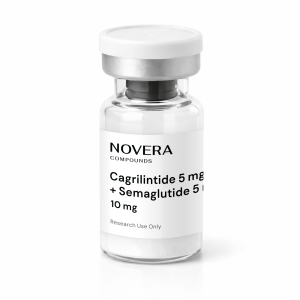
Dual amylin/GLP-1 combination for enhanced appetite control and sustainable weight loss. 5mg each.
Cagrilintide 10mg helps patients with chronic weight management and appetite concerns
Mazdutide 5mg is for treating obesity and support of metabolic wellness goals in patients
Mazdutide 10mg is treatment for appetite imbalance and support of healthy weight goals
Retatrutide 10mg helps treat appetite imbalance and support metabolic wellness in patients
Retatrutide 12 mg helps treat excess weight and appetite regulation concerns in obese patients
Triple GIP/GLP-1/glucagon receptor agonist for metabolic support and weight management. 15mg vial.
Triple GIP/GLP-1/glucagon receptor agonist for metabolic support and weight management. 20mg vial.
Retatrutide 24 mg is used for treating obesity and supporting metabolic health improvement
We work with leading pharmaceutical brands specializing in Metabolic Peptides medications, selected for their clinical reliability, regulatory compliance, and consistent treatment outcomes.
Metabolic Peptides are classified according to documented molecular relevance to metabolic signalling systems and cellular energy-regulation models. These compounds may be studied as receptor ligands, pathway probes, or molecular research tools in defined experimental systems.
Research involving Metabolic Peptides may focus on incretin receptor activity, insulin-associated signalling, adipocyte pathway models, pancreatic beta-cell systems, mitochondrial function, and metabolic gene expression.
Classification is based on mechanistic research profiles only and does not imply therapeutic or clinical activity.
Metabolic Peptides may appear in studies involving incretin receptor systems and metabolic pathway models. Experimental endpoints may include:
These studies describe molecular activity in controlled laboratory systems.
Some Metabolic Peptides may be studied in glucose-associated pathway research or insulin signalling models. Research endpoints may include:
No findings from these models should be interpreted as effects on glucose control in humans.
Metabolic Peptides may also be investigated in adipocyte biology and mitochondrial bioenergetic research. Experimental areas may include:
These applications support metabolic pathway investigation in vitro only.
Researchers selecting Metabolic Peptides typically evaluate:
Elivena provides product specifications and quality documentation where available.
Elivena does not provide experimental design guidance, dosing information, administration instructions, or interpretation of research outcomes.
Metabolic Peptides are supplied as research-use-only biochemical compounds. Documentation may include:
Elivena does not supply these compounds for human or veterinary administration.
Tirzepatide 75 mg supports weight management by helping influence hunger signals.
Retatrutide 24 mg is used for treating obesity and supporting metabolic health improvement
They are studied in laboratory models involving metabolic signalling, incretin receptor pathways, glucose-associated mechanisms, adipocyte biology, beta-cell systems, and mitochondrial function.
No. These compounds are strictly for laboratory research and are not intended for weight loss, appetite control, metabolic support, treatment, or clinical use.
The category was renamed from Weight Loss & Metabolic Peptides to Metabolic Peptides to keep the classification research-focused and avoid human-use or outcome-based wording.
All products are sold for Research Use Only. To continue you confirm that you are qualified research professional aged 21 or older.