
 Best Sellers
 Metabolic
 Regenerative
 Secretagogues
 Bioregulators
 Neuropeptides






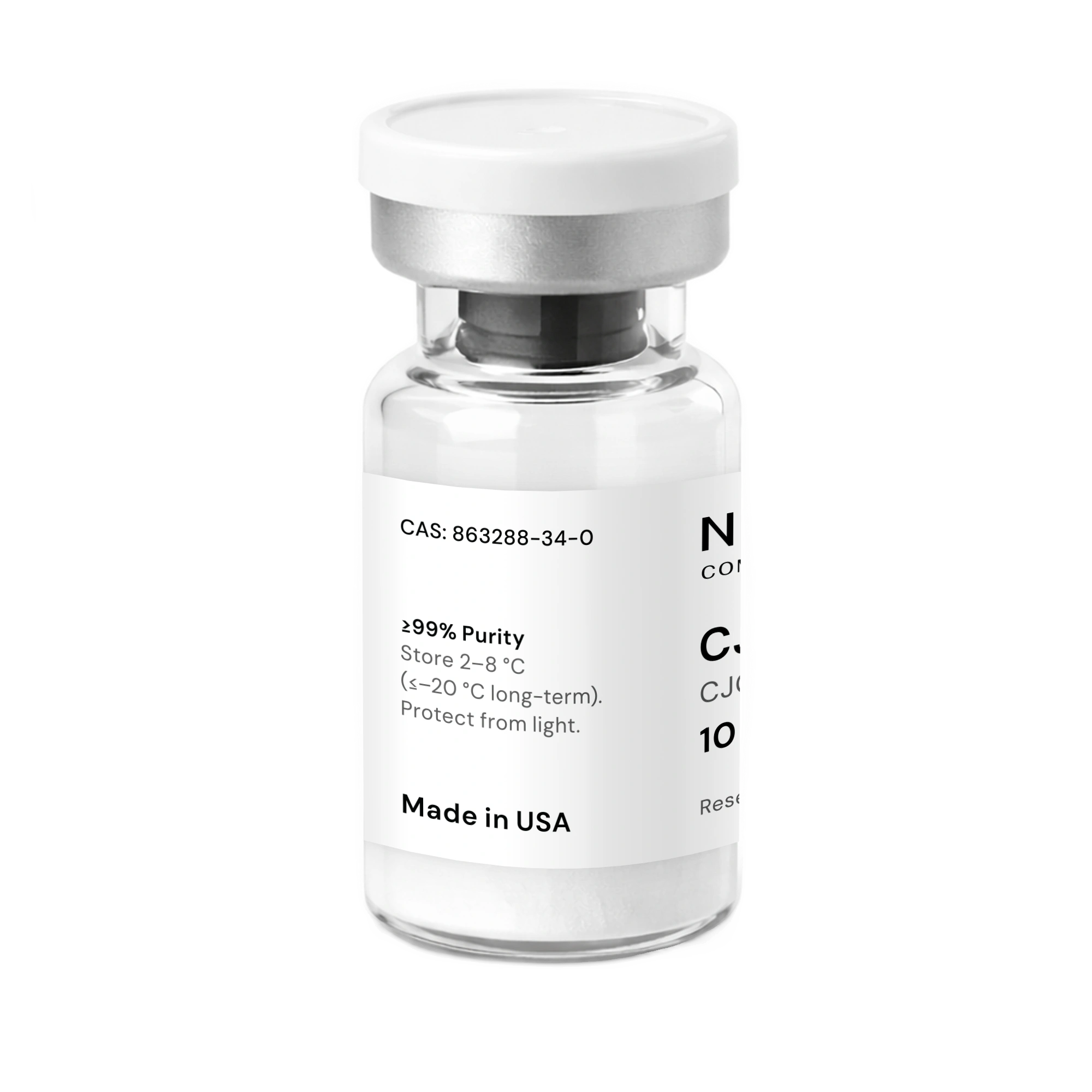
Made in the USA
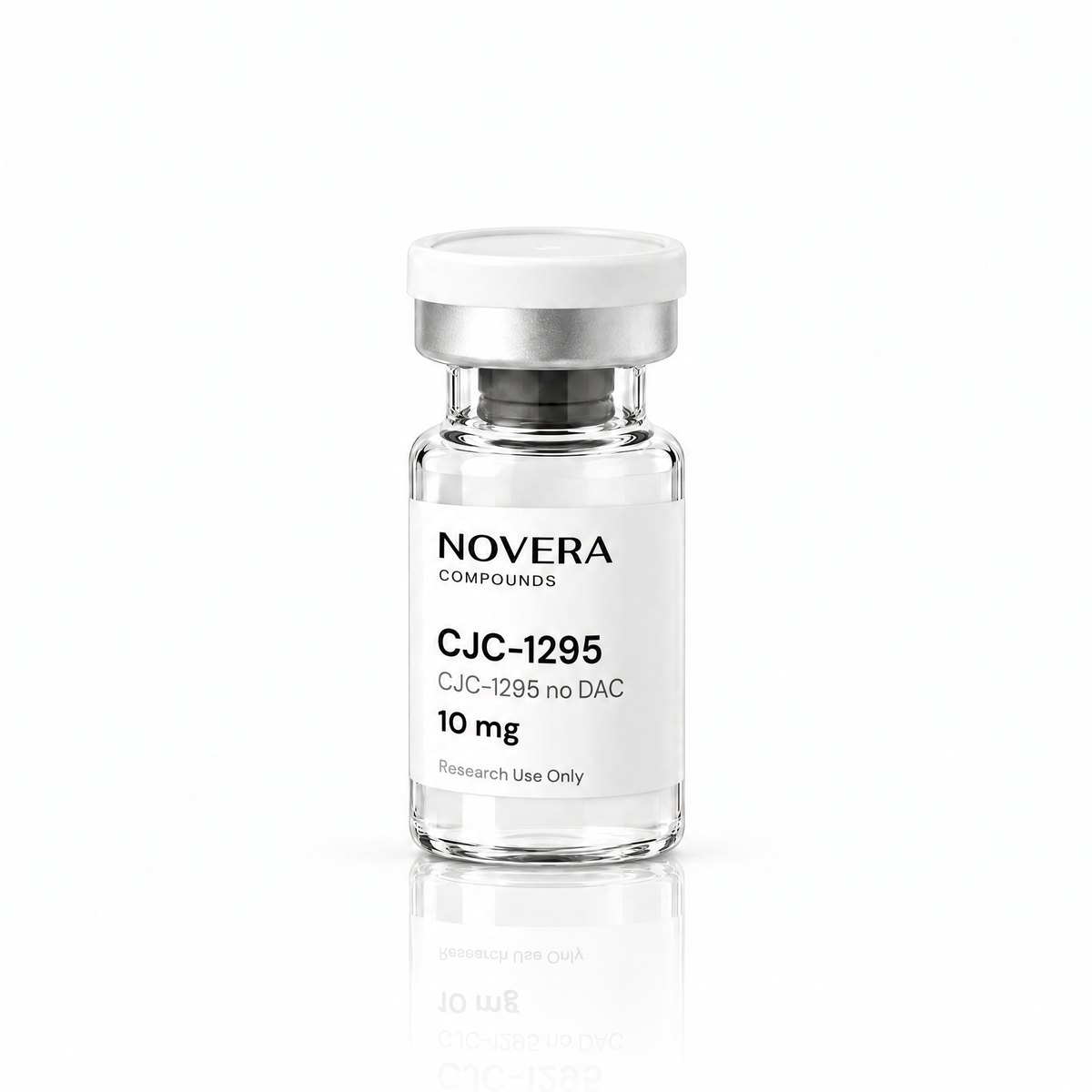
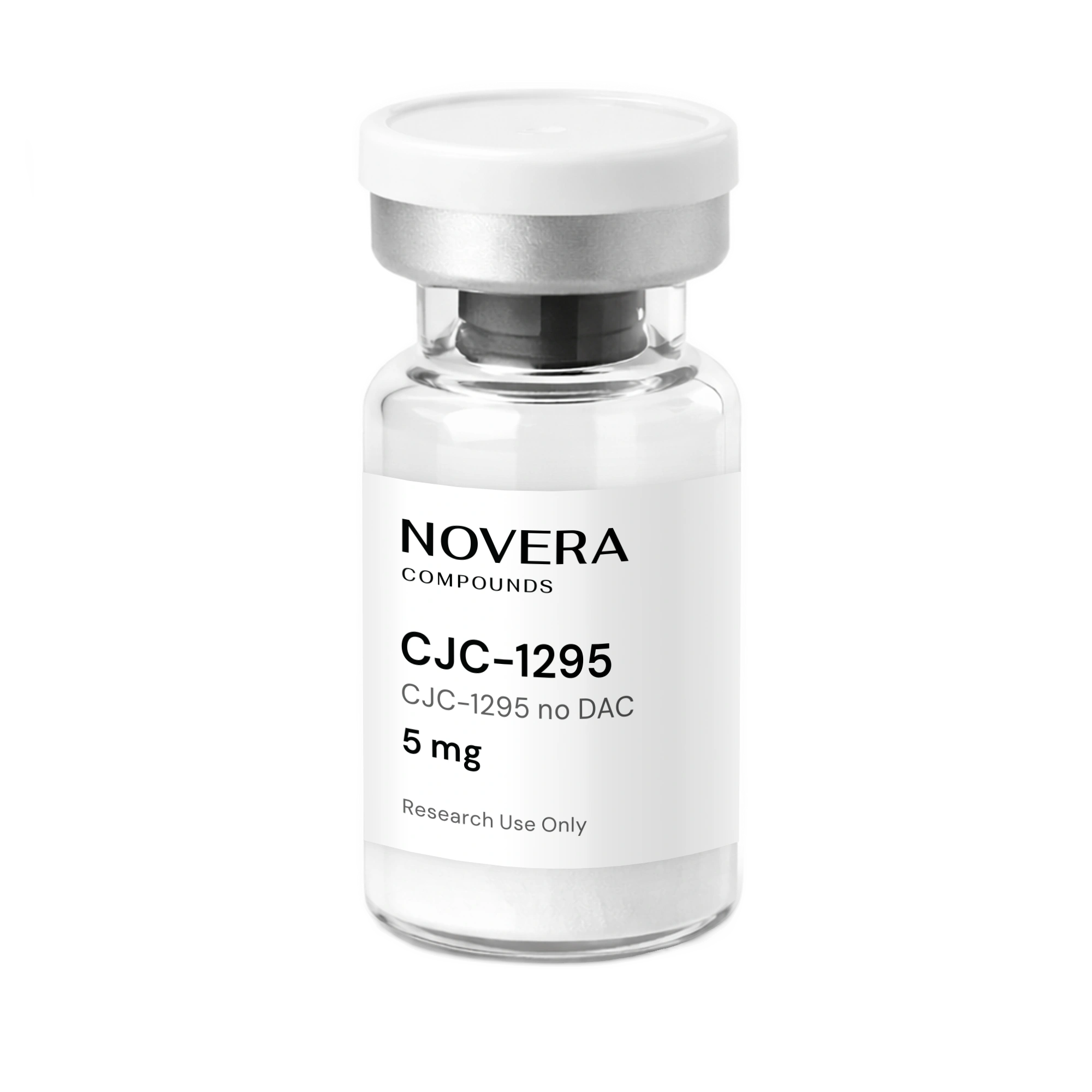
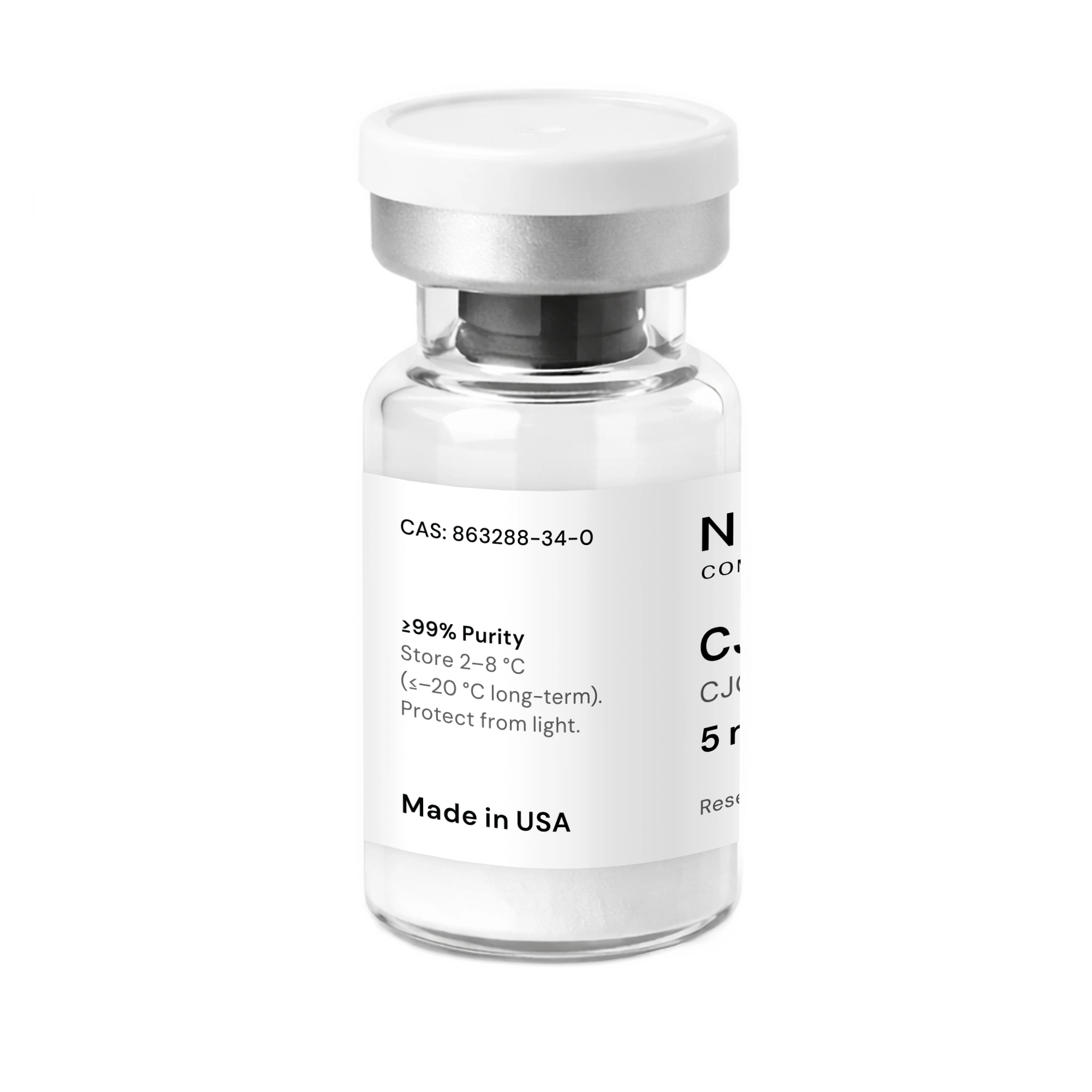
CJC-1295 without DAC
For research and laboratory use only. Not for human or animal consumption.
Fast & Secure
Shipping
Shipping
Wrong or damaged?
Reship or refund
Reship or refund
Storage & handling: Store at 2–8 °C (≤ –20 °C long-term), away from light. Ships at ambient temperature.
Shipping
Regular tracked: $15 per order, 5 to 10 days. Express tracked: $25 per order, 3 to 5 days. Orders are dispatched within 24–48 business hours. Regular shipping is free on orders over $200 and express on orders over $400, after discounts.
Research & Education Tool
Peptide Dosage Calculator
Enter the vial amount, diluent volume, and target amount to estimate concentration, the draw volume on a U-100 syringe, and approximate vial yield.
For research and educational use only. Check all values against the product label, certificate of analysis, and any applicable professional guidance before relying on the result.
mg Common targets
Concentration
-
mcg / mL
Volume per Dose
-
-
Estimated Draws / Vial
-
rounded down to whole draws
Draw Reference
Enter values to estimate the syringe mark.
0
-
-
-
-
CJC-1295 No DAC 10mg from Novera provides research teams with a GMP-manufactured, COA-verified GHRH analog for preclinical molecular interaction and signaling pathway studies. Produced by Elivena in USA-certified facilities, each vial delivers approximately 99% purity and consistent batch-to-batch quality. Global secure shipping is available for laboratory orders. Every order includes full COA documentation, handling instructions, and access to technical support for experimental protocol design — including combination study designs with Ipamorelin and other GHRH pathway peptides.
Product overview
CJC-1295 No DAC 10mg is suited for laboratories and research teams investigating GHRH analog structure-activity relationships. It supports studies examining peptide-receptor binding dynamics at the pituitary level, pulsatile signaling kinetics, and molecular stability profiles under controlled experimental conditions. Research teams designing multi-week preclinical protocols benefit from the 10mg concentration, which reduces vial turnover and ensures consistent peptide availability across extended observation periods. Produced by Elivena in USA GMP-certified facilities, each vial is verified by COA for sequence identity and purity.
For laboratory research use only. Not approved by FDA or EMA. Every batch includes a Certificate of Analysis confirming purity and identity.
Research focus
Molecular Stability and Degradation Kinetics
The No DAC configuration provides researchers with a structurally defined model for examining peptide degradation rates, plasma stability profiles, and half-life kinetics under various experimental conditions. Studies investigating the effect of molecular modifications on GHRH analog stability use CJC-1295 No DAC as a reference compound for comparative structural analysis.
Pulsatile Signaling Kinetics
The compound’s shorter duration of action makes it a preferred model for studying pulsatile peptide-receptor interaction patterns. Researchers examining the timing, amplitude, and frequency of GHRH receptor activation use this analog to characterize signaling kinetics in cell-based and preclinical in-vivo models. Paired with Ipamorelin in combination protocols, it enables investigation of complementary receptor pathway interactions.
GHRH Receptor Interaction Modeling
CJC-1295 No DAC supports in-vitro and preclinical studies examining the structure-activity relationship of GHRH analogs at the pituitary receptor level. Researchers characterizing binding affinity, receptor selectivity, and downstream cAMP pathway activation utilize this compound for its well-defined molecular profile and high purity grade.
Methodological notes
Preparation Guidelines
Reconstitute lyophilized CJC-1295 No DAC 10mg with sterile bacteriostatic water using standard laboratory technique. Typical reconstitution volumes in research settings range from 1–2ml depending on experimental concentration requirements. Use sterile equipment for all handling and preparation steps.
Storage Conditions
Store lyophilized peptide at 2–8°C, protected from light and moisture, prior to reconstitution. Following reconstitution, maintain refrigeration at 2–8°C and use within the timeframe specified in your laboratory protocol. Lyophilized material does not require cold-chain shipping but should be refrigerated upon receipt to maximize stability. Each Elivena vial is supplied with handling guidance and COA documentation.
Quality & sourcing
Pharmaceutical-Grade Manufacturing by Elivena
Manufactured by Elivena in USA GMP-compliant facilities, CJC-1295 No DAC 10mg achieves approximately 99% purity confirmed by independent third-party testing. Each vial includes COA documentation verifying peptide sequence, purity grade, and identity. This level of characterization supports reproducible, high-quality preclinical research requiring precisely defined GHRH analog material.
Chemical properties
- CAS: 863288-34-0
- Chemical Formula: C₁₅₂H₂₅₂N₄₄O₄₂
- Molecular Weight: 3367.9 g/mol
- Peptide Sequence: Tyr-D-Ala-Asp-Ala-Ile-Phe-Thr-Gln-Ser-Tyr-Arg-Lys-Val-Leu-Ala-Gln-Leu-Ser-Ala-Arg-Lys-Leu-Leu-Gln-Asp-Ile-Leu-Ser-Arg
- Synonyms: MOD-GRF(1-29), CJC-1295 without DAC, modgrf, tetrasubstituted grf, modified grf
- Shelf life: 24 months from the manufacturing date.
Key features
GHRH Analog Structural Profile
CJC-1295 No DAC is a synthetic analog of growth hormone-releasing hormone (GHRH), a naturally occurring peptide originating in the hypothalamus. The No DAC configuration — meaning without a Drug Affinity Complex — produces a shorter plasma half-life compared to the DAC variant. This shorter half-life makes it a well-characterized model for studying pulsatile receptor activation kinetics and time-dependent signaling patterns in pituitary model systems. Its defined structural profile supports reproducible molecular interaction studies.
Receptor Binding and Signaling Pathway Investigation
CJC-1295 No DAC is studied for its binding affinity to GHRH receptors and the downstream intracellular signaling cascades this interaction initiates. Researchers use this compound to examine receptor occupancy dynamics, signal transduction pathway activity, and feedback inhibition mechanisms in controlled preclinical models. Its peptide hormone structure enables investigation of GHRH receptor interaction at a molecular level, distinct from exogenous hormone administration paradigms.
Pharmaceutical-Grade Manufacturing by Elivena
Manufactured by Elivena in USA GMP-compliant facilities, CJC-1295 No DAC 10mg achieves approximately 99% purity confirmed by independent third-party testing. Each vial includes COA documentation verifying peptide sequence, purity grade, and identity. This level of characterization supports reproducible, high-quality preclinical research requiring precisely defined GHRH analog material.
Included
Express tracked
$25 per order · delivery in 3–5 days
- Tracked door to door, dispatched within 24–48 business hours
- Ambient shipping, safe for lyophilized peptides
Included
Regular tracked
$15 per order · delivery in 5–10 days
- Free on orders over $200
- Tracked door to door, dispatched within 24–48 business hours
Is CJC-1295 No DAC intended for medical use?
No. It is supplied exclusively for laboratory research.
What types of experiments use this peptide?
Receptor interaction assays and intracellular signaling research.
What is the structural difference between CJC-1295 with and without DAC?
The DAC (Drug Affinity Complex) modification extends the compound’s plasma half-life by enabling albumin binding, resulting in prolonged receptor exposure. The No DAC version lacks this modification, producing a shorter half-life and more defined pulsatile activation kinetics. Researchers select between variants based on the temporal resolution requirements of their signaling or receptor interaction study design.
What reconstitution volume is typically used in laboratory settings?
Research protocols commonly use 1–2ml of sterile bacteriostatic water per 10mg vial, yielding concentrations appropriate for a range of in-vitro and preclinical applications. Specific concentration requirements depend on the experimental design and endpoint being measured.
How is CJC-1295 No DAC typically used in combination research protocols?
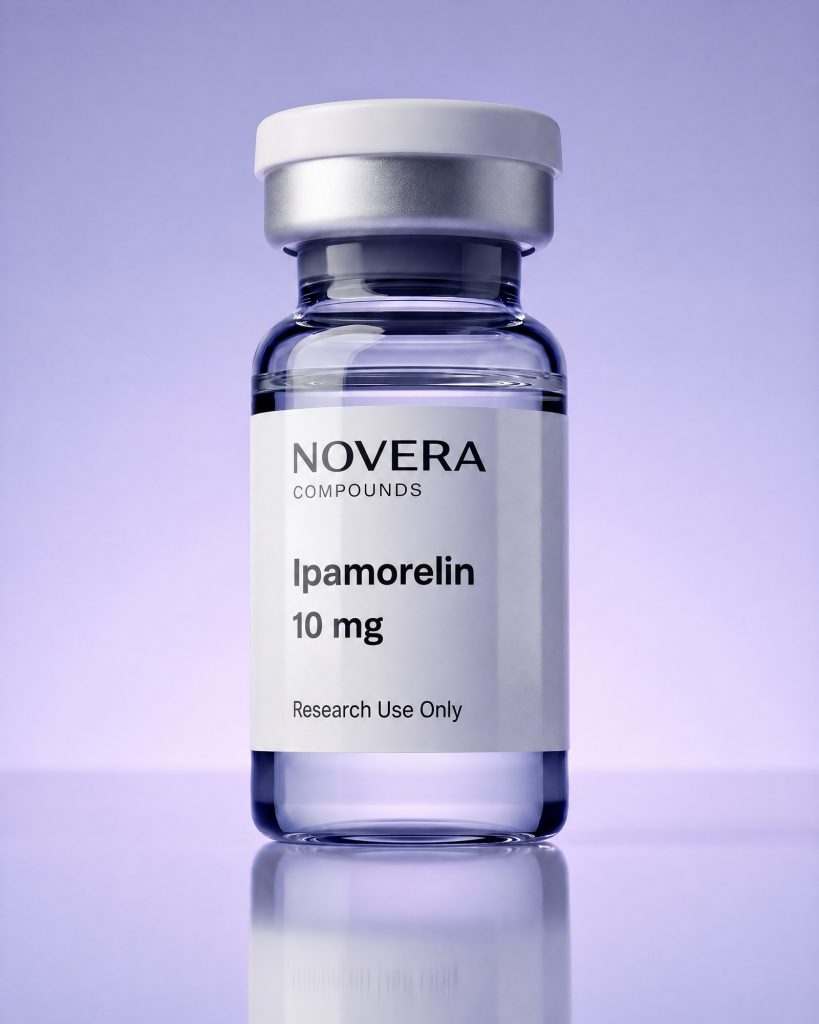
CJC-1295 No DAC is frequently paired with Ipamorelin in preclinical studies to investigate complementary GHRH and ghrelin receptor pathway interactions. Combination protocols allow researchers to examine additive or synergistic signaling activity across distinct receptor systems in controlled experimental models.
Lab results
View all lab reports- CAS: 863288-34-0
- Chemical Formula: C₁₅₂H₂₅₂N₄₄O₄₂
- Molecular Weight: 3367.9 g/mol
- Peptide Sequence: Tyr-D-Ala-Asp-Ala-Ile-Phe-Thr-Gln-Ser-Tyr-Arg-Lys-Val-Leu-Ala-Gln-Leu-Ser-Ala-Arg-Lys-Leu-Leu-Gln-Asp-Ile-Leu-Ser-Arg
- Synonyms: MOD-GRF(1-29), CJC-1295 without DAC, modgrf, tetrasubstituted grf, modified grf
- Shelf life: 24 months from the manufacturing date.
Free shipping over $200
Save up to 25%.
Build the researcher’s box: any compounds, any doses, one order, and every vial costs less.

3 vials
save 5%

12 vials
save 15%

50 vials
save 25%
Delivered tracked, every order.
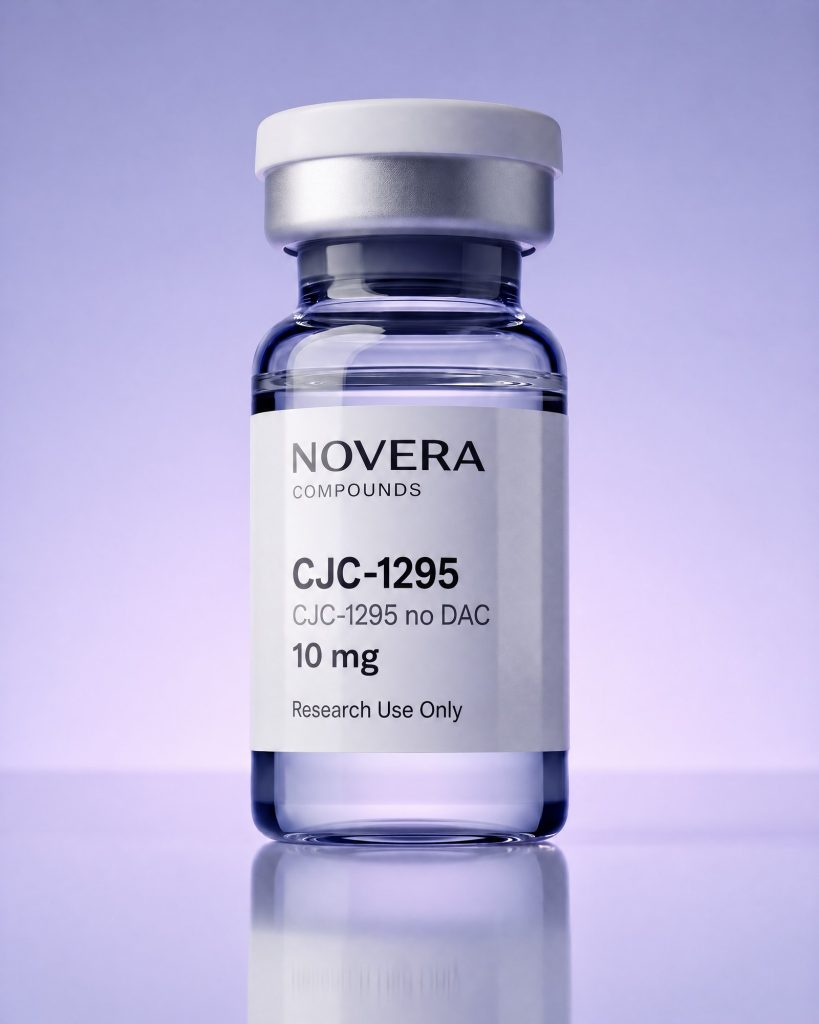
Shipping options
Dispatched in 24–48 business hours.
Regular tracked$15 per order · 5 to 10 days
Express tracked$25 per order · 3 to 5 days
Free shippingRegular over $200 · express over $400, after discounts
Researchers often ask
Is CJC-1295 without DAC for human use?
No. CJC-1295 without DAC is sold for laboratory research only. It is not for human or veterinary use, and it is not a drug, food or cosmetic.
How do I find the lab report?
Use View COAs on the product page, or search the COA library by compound name. The summary is public; the signed PDF reports are available to signed-in researchers.
Why is purity measured by LC-MS?
LC-MS separates the sample and identifies each component by its mass, so one run confirms identity and measures purity.
When will my order ship?
Orders are dispatched within 24–48 business hours. Regular tracked delivery takes 5 to 10 days and express tracked 3 to 5 days. Regular shipping is free on orders over $200 and express on orders over $400, after discounts.
You might also like
The Lab Journal
All articlesThymic Peptides
Cytokine Expression Assays in Thymic Peptide Research
Introduction Cytokine expression assays are laboratory methods used to detect and quantify cytokines that cultured cells release or produce. A…
Nov 2, 2026
· 8 min read
Thymic Peptides
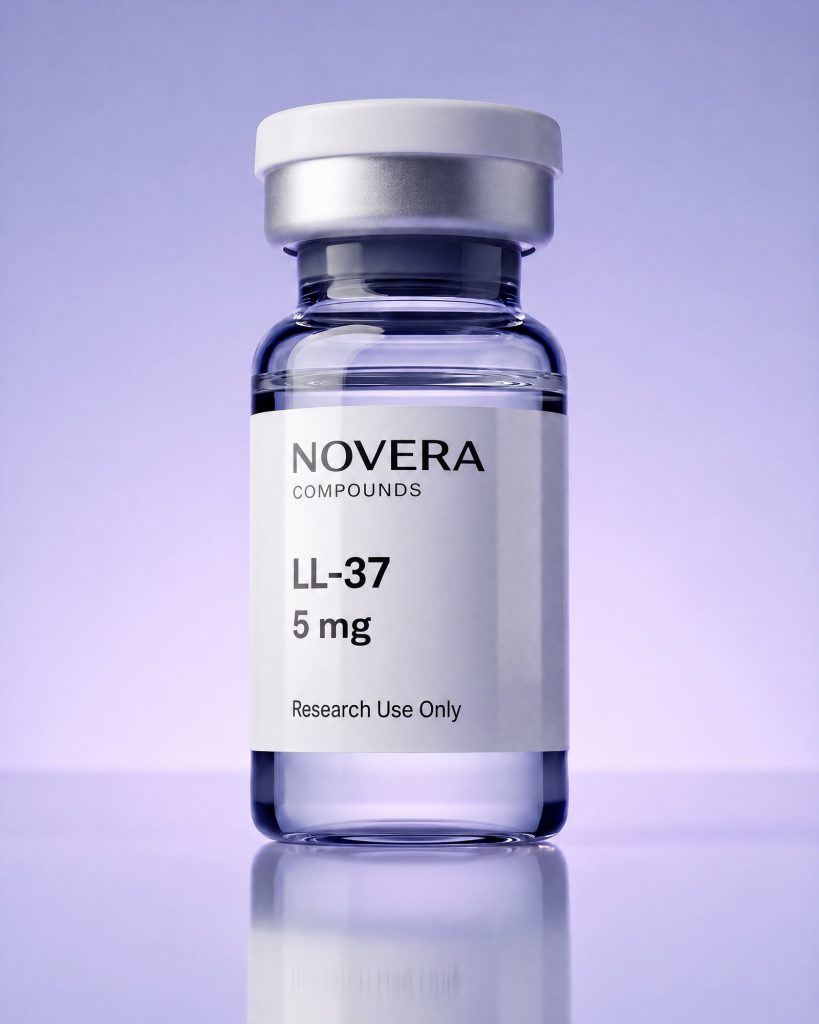
LL-37 in Antimicrobial Peptide Research
LL-37 is a frequently studied antimicrobial peptide in laboratory research. The compound is a 37-amino-acid peptide derived from the human…
Oct 28, 2026
· 11 min read
Secretagogues
The GHRP Family in Peptide Research (GHRP-6, GHRP-2, Hexarelin)
GHRP-6, GHRP-2, and Hexarelin are synthetic growth-hormone-releasing peptides studied in ghrelin receptor research. Although they belong to the same family,…
Oct 14, 2026
· 12 min read
Secretagogues
Somatotropic Pathway Research with Peptides
This article is written for academic researchers and professionals qualified to handle research-grade compounds. It is a laboratory reference and…
Oct 5, 2026
· 8 min read